
Shenandoah
Logan Rutledge
116 views
- Program Notes
I began composing Shenandoah during my doctorate, but came back to finish the arrangement
during my time living and teaching in northwestern North Dakota. I was inspired to revisit
this beloved folk tune because I was teaching many indigenous students, I lived so close to the
Missouri and Yellowstone River confluence,and I wanted to understand how this song and its lyrics
came about. While there is not a singleconclusive origin for this song, one of the theories is that
it originated during the fur trade, wherefolks would use the Missouri River as a means of transporting
pelts to trade and sell. The nameShenandoah, however, is thought to be an anglicized spelling of
Skenandoa, a Chief of the Oneida during the 18th and early 19th centuries in what is now upstate
New York. Like manyAmerican folk tunes, the lyrics are laden with America's troubled history.
Using this theory of fur traders, the song depicts these traders passing through indigenous lands,
and seeking to takehe daughter of Chief Shenandoah in exchange for money. In the full text,
Chief Shenandoah says no, but the traders kidnap her against his wishes. In my arrangement I change
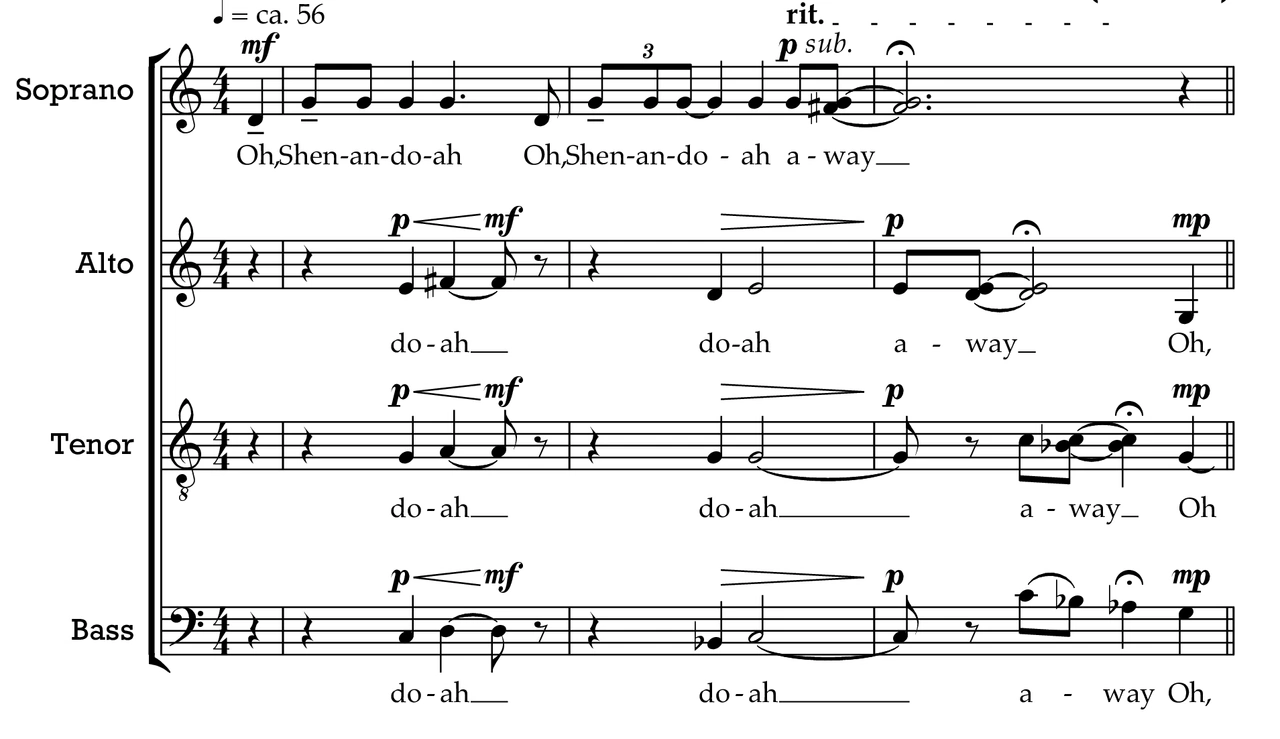
the melody and musical feel to match the lyrics connotation. I end the piece closely
mirroring the soulful beginning because I chose to end the piece with Chief Shenandoah saying no,
and longing for a story where his words were respected, so that he, and hopefully his daughter,
have the last say.
In programming this work, it is extremely important to communicate this context for the piece.
While many American folk tunes are beautiful or nostalgic, their history's are evidence of the
real story of America's founding and legacy, and this should not be erased. It is my belief that
these American folk songs are perfect for educating the greater public about their meanings
and the history and context that surrounds them.
- Performer Credits
- Cantai (AI Rendering)
- Publisher
- Rutledge Press (ASCAP)